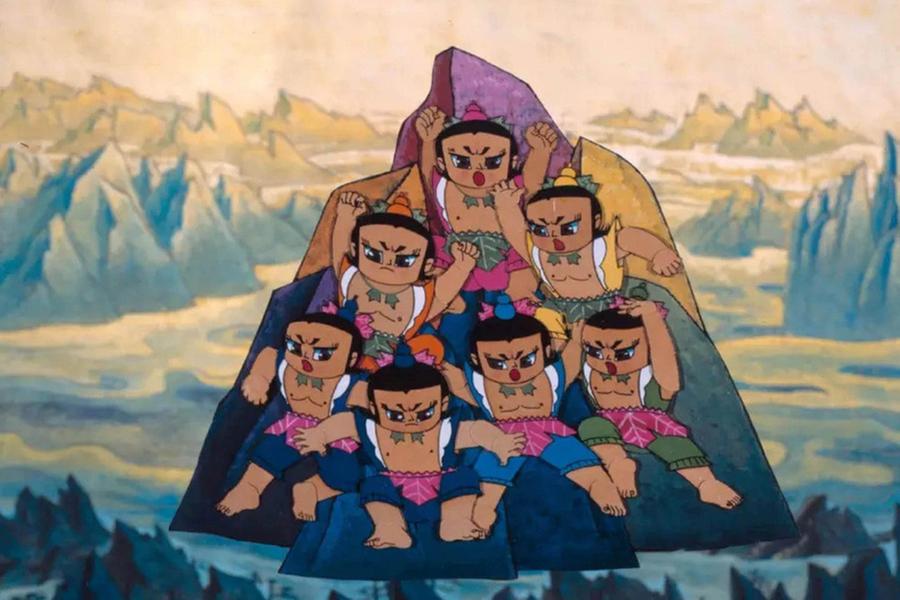
Calabash Brothers
Introduction
The Calabash Brothers is a classic Chinese animated television series that first premiered in 1986. Produced by the renowned Shanghai Animation Film Studio, this series emerged during a period when the Chinese animation industry was facing challenges yet managed to capture the hearts of many. It stands as a significant work in the landscape of Chinese animation, known for its unique storyline, distinct characters, and cultural impact. The series follows the adventures of seven brothers, each with distinct powers, as they battle evil spirits and protect their family legacy.
Plot Summary
The story of Calabash Brothers revolves around seven brothers born from a magical calabash vine. Each brother possesses unique abilities associated with the colors they represent: red, orange, yellow, green, cyan, blue, and purple. The brothers are tasked with rescuing their grandfather, who is held captive by two evil spirits—a snake demon and a scorpion demon. The brothers must overcome various challenges, leveraging their powers and teamwork to defeat the demons and save their grandfather. The narrative explores themes of bravery, family bonds, and the triumph of good over evil, set against a backdrop of mystical landscapes and folklore-inspired challenges.
Characters
Main Characters
Red Brother: Known for his immense strength, Red Brother is the eldest and often takes the lead in battles against the demons.
Orange Brother: Possessing keen sight, he can see through illusions and obstacles, aiding the brothers in uncovering traps set by their enemies.
Yellow Brother: His power lies in his ability to consume anything, providing the team with the materials or energy needed in their quests.
Green Brother: Capable of invisibility, Green Brother sneaks past enemies and shields his brothers at critical moments.
Cyan Brother: Known for his incredible agility and speed, he maneuvers swiftly in combat and escapes perilous situations.
Blue Brother: With control over water, Blue Brother uses his abilities to douse flames and create barriers.
Purple Brother: The youngest, he commands the power of illusion, often confusing enemies and creating opportunities for his siblings.
Supporting Characters
Snake Demon: One of the primary adversaries, she uses her cunning and deceptive abilities in her quest to dominate the magical world.
Scorpion Demon: Accompanying the Snake Demon, he provides brute force and ferocity, challenging the brothers in various encounters.
Grandfather: The wise and nurturing figure held captive by the demons, motivating the brothers to embark on their heroic journey.
Production
Development
The development of Calabash Brothers was undertaken by the Shanghai Animation Film Studio, known for its pioneering work in Chinese animation. The series was conceptualized during a time when the Chinese animation industry was seeking to establish a unique identity, distinct from Western influences. The creators drew inspiration from traditional Chinese folklore and mythology, crafting a narrative that resonated with audiences by reflecting cultural values and virtues.
Animation Techniques
Calabash Brothers employed traditional animation techniques prevalent in the 1980s, characterized by hand-drawn illustrations and vibrant color palettes. The series incorporated distinctive Chinese artistic elements, such as paper-cutting and ink-and-water styles, which set it apart from other animations of its time. These techniques contributed to the show's aesthetic, enhancing its appeal and ensuring its place as a cherished classic in Chinese animation history.
Cultural Impact
Calabash Brothers holds a significant place in the cultural memory of many Chinese who grew up in the 1980s and 1990s. The series' popularity extended beyond China, as it was translated into several languages, introducing international audiences to Chinese animation. It has inspired various adaptations and merchandise, affirming its status as an iconic series. The Calabash Brothers have become cultural symbols, representing the potential of Chinese animation and the enduring appeal of stories rooted in traditional folklore. The series continues to be celebrated for its contribution to the animation industry and its role in shaping the childhoods of many across generations.








